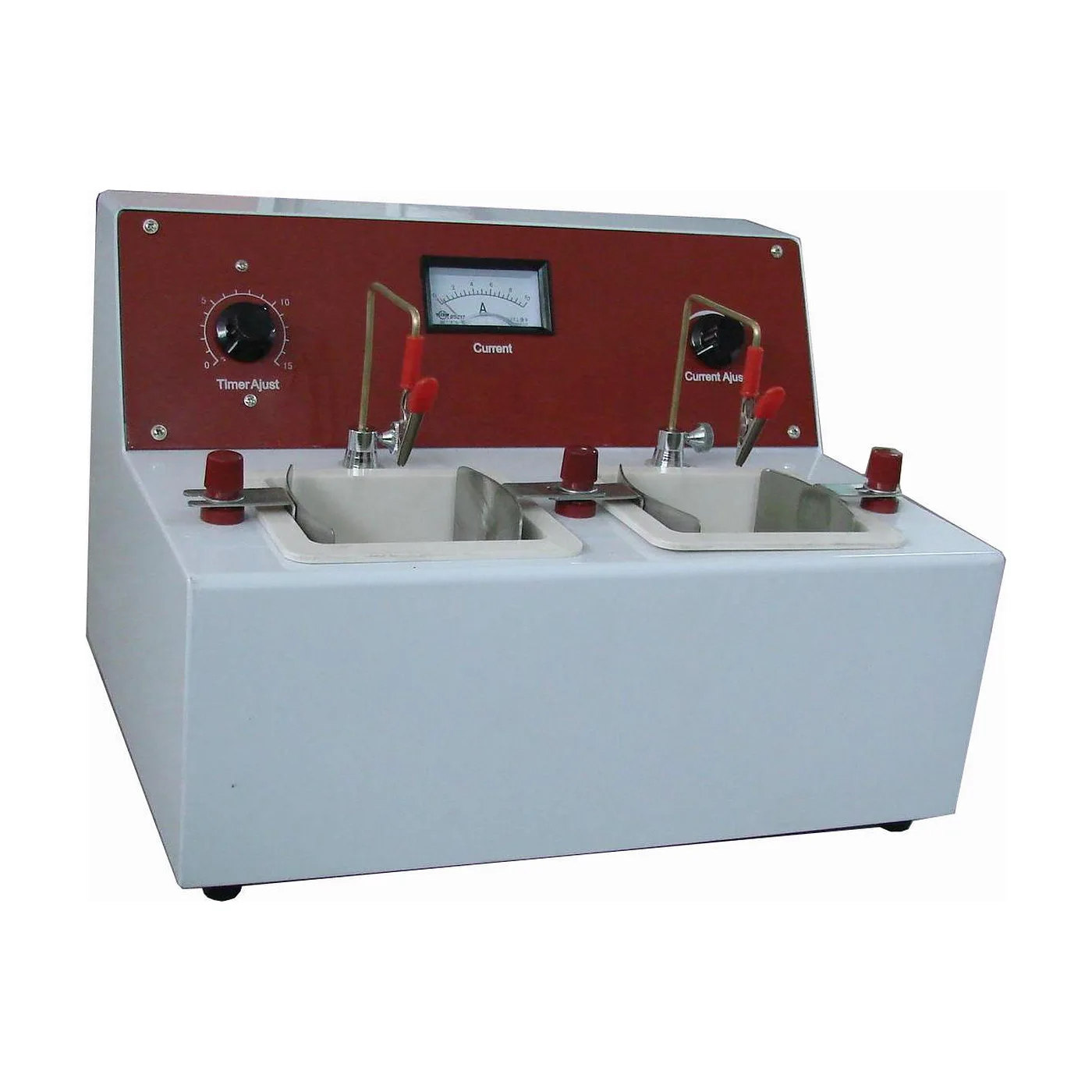
LZDZ-I Dual-Tank Electrolytic Polishing Unit — image 1 of 2
Electrolytic Polisher
LZDZ-I Dual-Tank Electrolytic Polishing Unit
Two independent electrolyte tanks with separate current control, for polishing cobalt-chrome frameworks without cross-contaminating baths.
SKU FD-LZDZ1-DUALMade to order · Ships from Tianjin, China
Sales tax is calculated at checkout from your ship-to state. Freight quoted separately.
Prices as published by Fidara Dental Supply. Freight, duties and local charges are not included.
Need volume pricing or a fit-out quote? Request a quote
Volume pricing
- Quantity
- Unit price
- 1–9
- $145.00
- 10+
- $128.00
Specification
- Tanks
- 2 × independent, 800 mL each
- Current control
- 0–10 A adjustable, per tank
- Output voltage
- 0–18 V DC
- Timer
- 0–15 min, per tank
- Power consumption
- 250 W
- Supply
- 110 V / 60 Hz
- Cabinet
- Powder-coated steel, stainless splash trays
- Dimensions
- 490 × 360 × 330 mm
Why this unit
An electrolytic polisher with two separate tanks and two separate current circuits. The practical reason for two tanks is not throughput — it is that a fresh bath and a spent bath give visibly different results, and a single-tank unit forces the technician to choose between changing electrolyte too often or accepting a duller finish toward the end of its life.
Current is set per tank on the analogue meter, and each tank has its own timer. Cast frameworks come out of the bath ready for rubber-wheel finishing, which removes most of the coarse stone work that would otherwise be needed.
The cabinet is powder-coated steel with a removable stainless splash tray under each tank.
Choosing an electrolytic polisher
- ThroughputTwo removable 800 ml tanks and two anodes — two workpieces in parallel — and the tanks lift out for cleaning.
- Process stabilityConstant-current, constant-voltage output with overload and overheat protection; current distributes evenly, which is what prevents over-polishing.
- Cycle controlThe timer stops the machine automatically at 4–6 minutes. Use low current and watch the work — over-polishing damages the piece.
- Bath limitsKeep the electrolyte under its rated 50 °C, and check that the supply voltage matches the machine before connecting.
Also on the surface treatment bench